Silence Turned into Color – The mother of internationally acclaimed artist Nicholas Kontaxis, who was diagnosed with a brain tumor in infancy, speaks to Marie Claire
Through an inoperable tumor, silences, and epileptic seizures, Nicholas found a voice in colors—thanks to his mother, who believed in him, protected him, and opened the path to creativity. A Marie Claire interview with Krisann Kontaxis, about unconditional love.
By Evita Tsilochristou
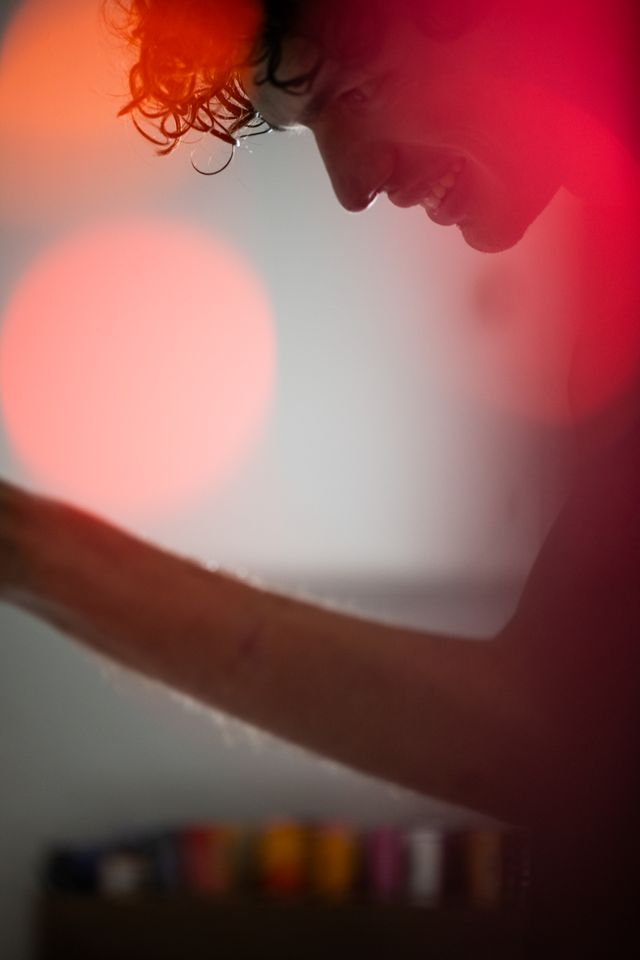
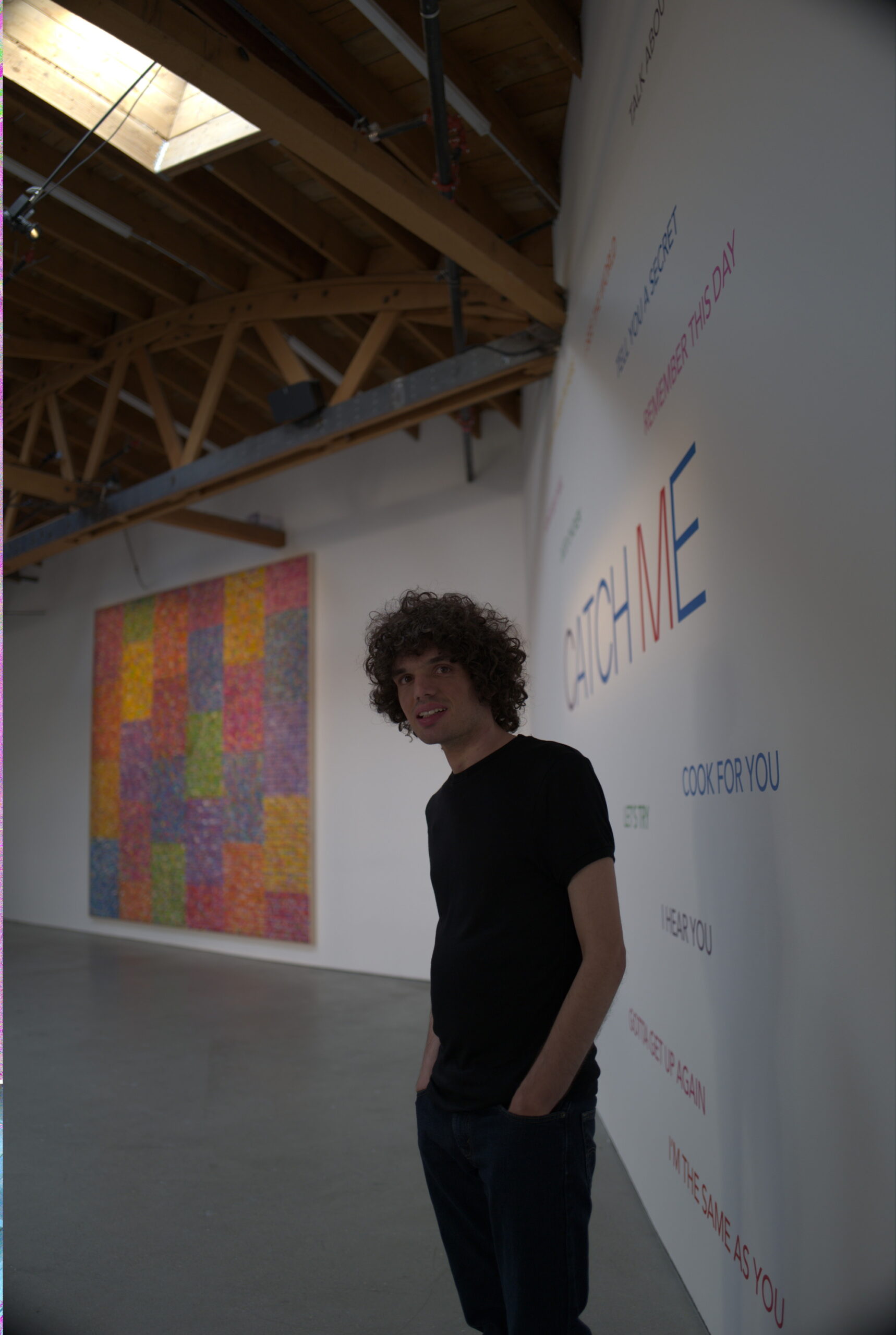
Nikolas Kontaxis, a 29-year-old Greek-American painter, is a living example of the power of human will and resilience. At just 14 months old, he was diagnosed with an inoperable brain tumor, which caused him severe physical and developmental challenges, including epileptic seizures and loss of speech. Despite these obstacles, the Forbes 30 Under 30artist found in painting a unique way to express himself and communicate with the world. He stands as a symbol of strength, perseverance, and artistic freedom. Despite his serious diagnosis and the more than 75,000 epileptic seizures he has endured, he has built an internationally recognized artistic career. Through his work, he transforms challenges into creativity, proving that art knows no limits, restrictions, or exclusions.
A decisive factor in his artistic journey has been the unwavering support of his mother, Krisann Kontaxis. Recognizing Nikolas’s attraction to colors and his need for creative expression, Krisann transformed the family garage in Rancho Mirage, California, into a fully equipped painting studio. She provided her son with all the necessary materials and tools, encouraging him to explore and develop his talent. Her dedication went far beyond providing resources—it extended to deep emotional support, helping him navigate his daily health challenges while finding meaning and joy through art.
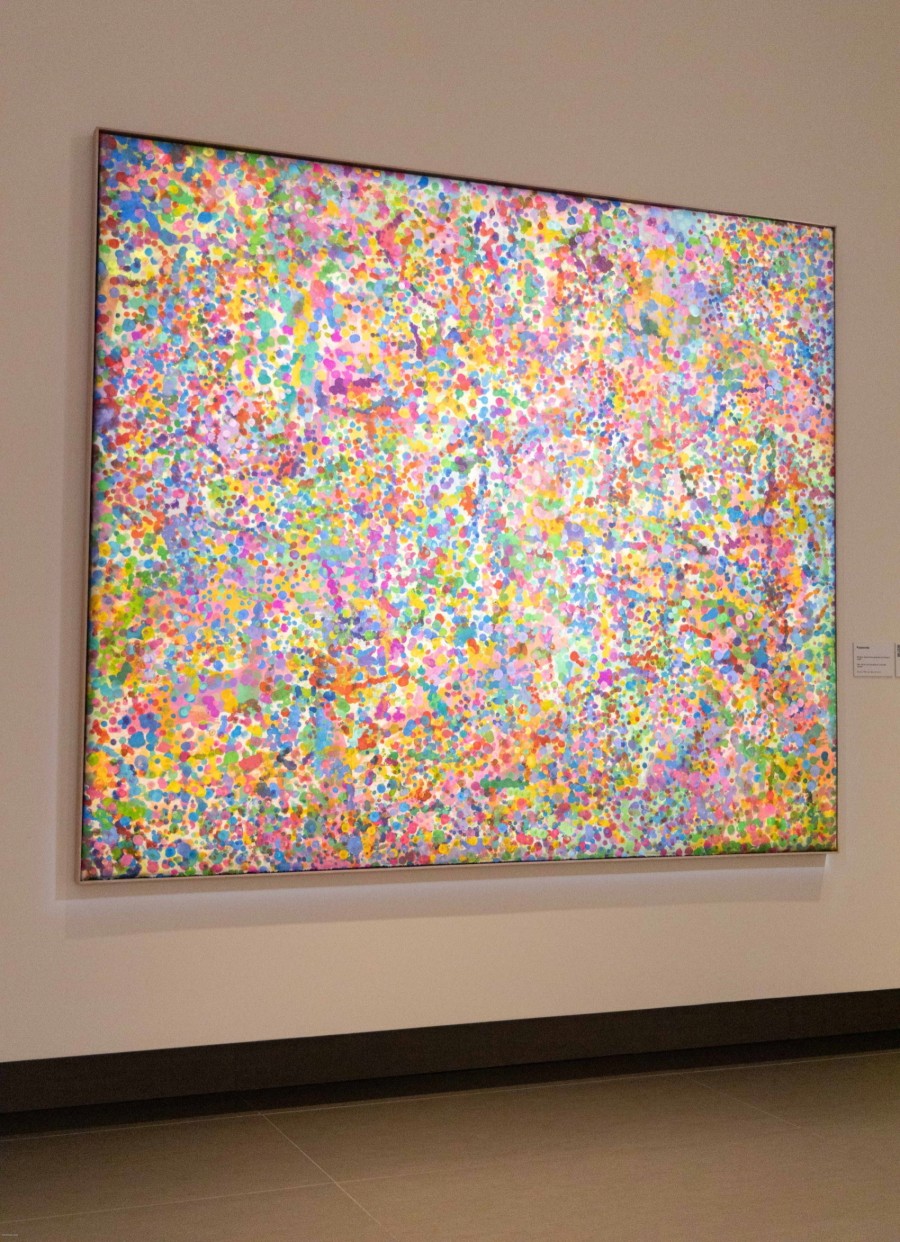
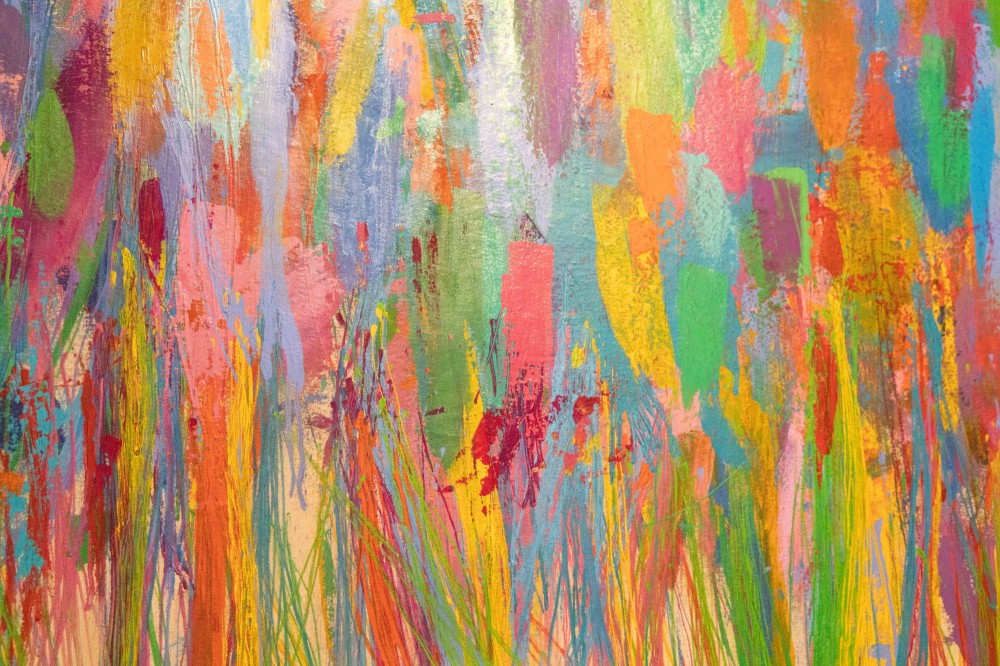
Today, the works of Nikolas Kontaxis — renowned for their vibrant colors and abstract expression—have gained international recognition, with exhibitions in cities such as Los Angeles, Chicago, New York, and London. His story serves as a source of inspiration, highlighting the importance of family support and dedication in overcoming obstacles and achieving self-realization through art.
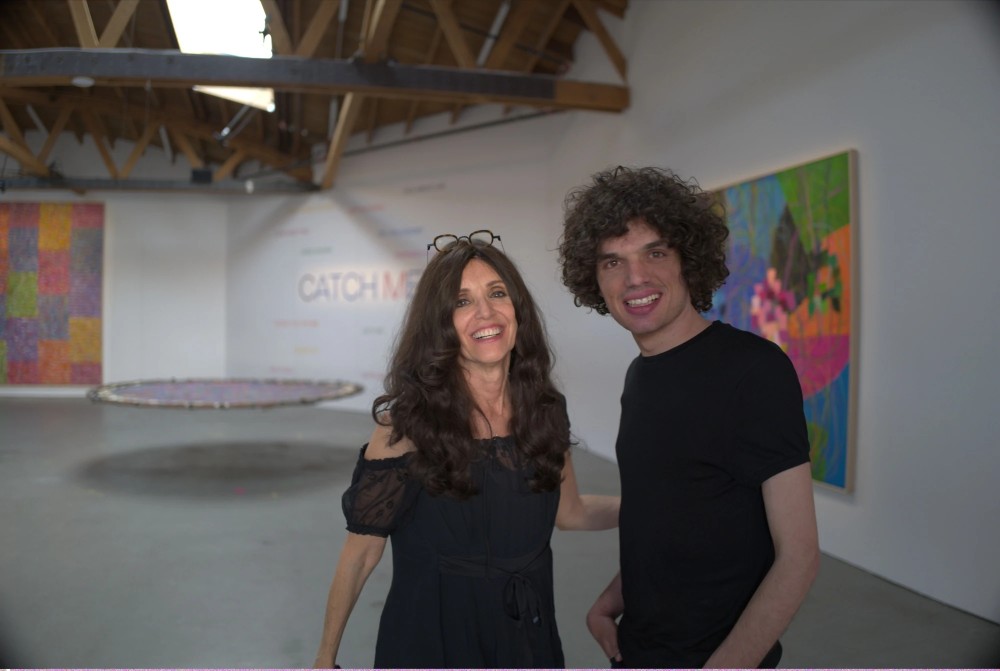
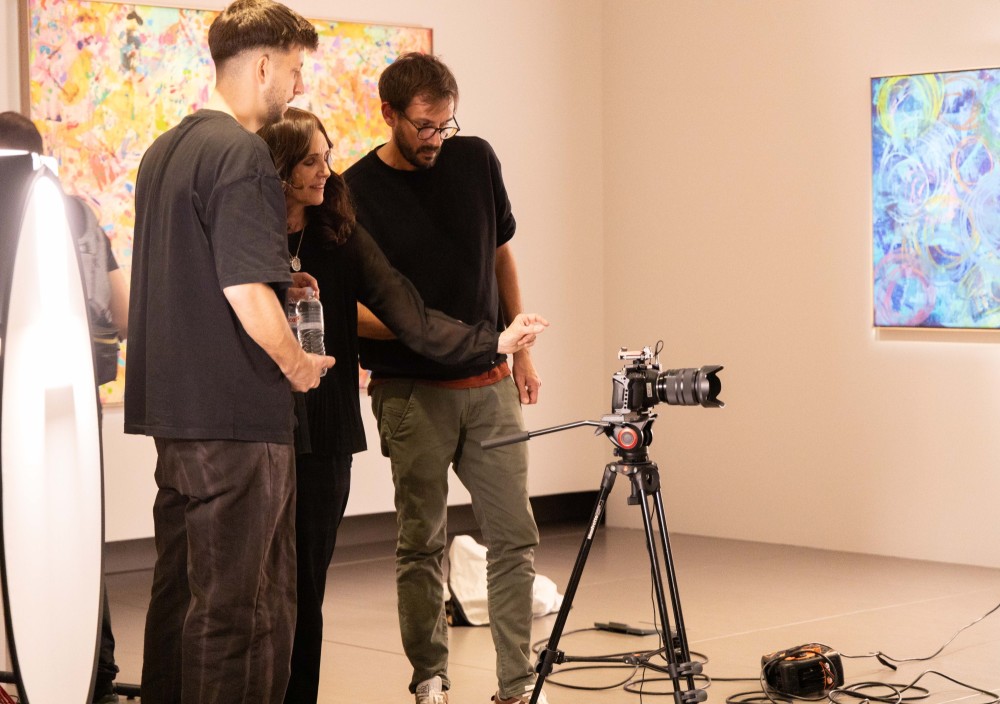
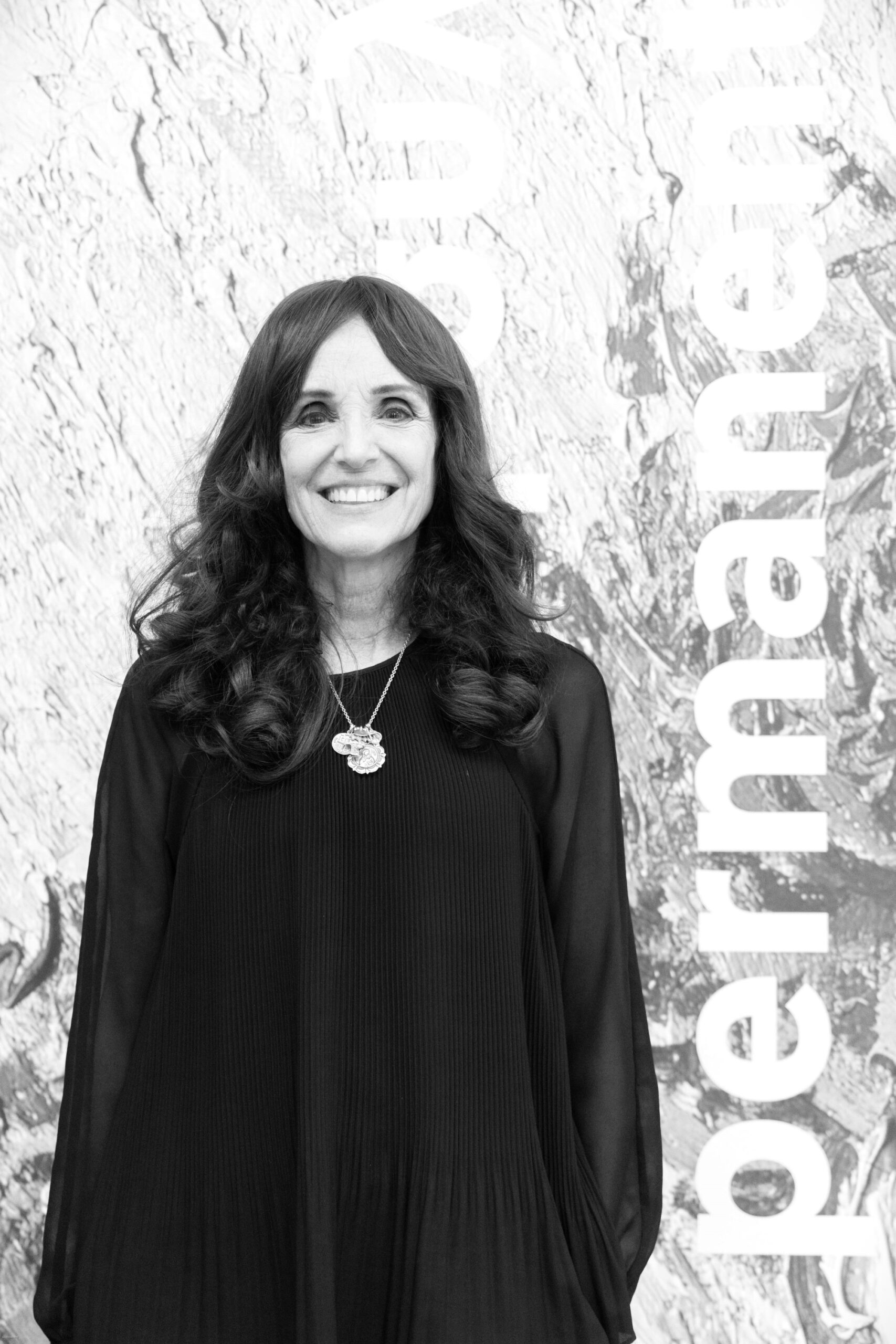
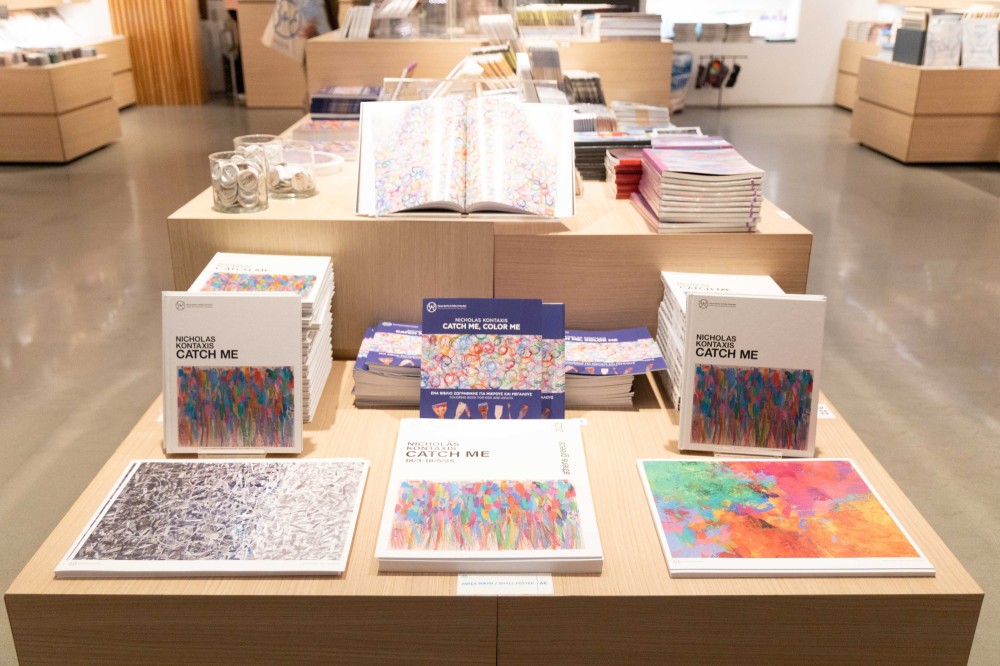
We met his mother, Krisann, at the Basil & Elise Goulandris Foundation during the exhibition Catch Me (running until May 18), an ode to the power of human will and inclusion. At the time, she was actively participating in the filming of a documentary about Nikolas’s life and work. With eyes full of focus and energy, she moved among her son’s paintings, conversing with the crew, observing every detail—as if personally curating a piece of history she didn’t want to see fade. During a break, she spoke to Marie Claire with striking honesty about her son’s journey, the faith that kept her standing, and the power of art to transform hardship into light.
The diagnosis and the stages of acceptance
Tell us about Nikolas’s early years and how you discovered the brain tumor. It all started when Nikolas was just 14 months old. He had a small seizure, and that’s when we went to the doctor. They sent us for an MRI, and that’s when they told us there was something in his brain. From that moment, our struggle with this reality began.
How did you deal with the diagnosis and the seizures? It was a journey of life, not just a phase. The seizures increased and became worse. We had to accept that this was something we couldn’t “fix.” And when you can’t fix something, you have to learn to live with it. We went through years of acceptance, hope for treatment, and eventually, we focused on how to have a beautiful life, even with this challenge. And I think we succeeded.
Why did you decide not to go ahead with the hemispherectomy, even though the doctors recommended it? Because the success rate they gave us was only 25%. We couldn’t risk such a major operation, with possible consequences of paralysis, without a clear hope of healing.
The discovery of his love for painting
How did you discover Nicholas’s love for painting and his talent? He loved colors from a very young age. Bright colors would “wake him up” whenever he was feeling low. From early on, he had a connection with art, mainly through the church and Byzantine iconography. He could stand for hours in front of the icons. That love eventually grew into a profound artistic expression.
When did he start painting? He was always working with his hands, mostly because the seizures would confine him. He did puzzles, crafts, and through that, he strengthened his hands. He could work with colors for hours. At school, he stood out in art class.
Did he go to a special school? No, to a regular one.
A mother’s support
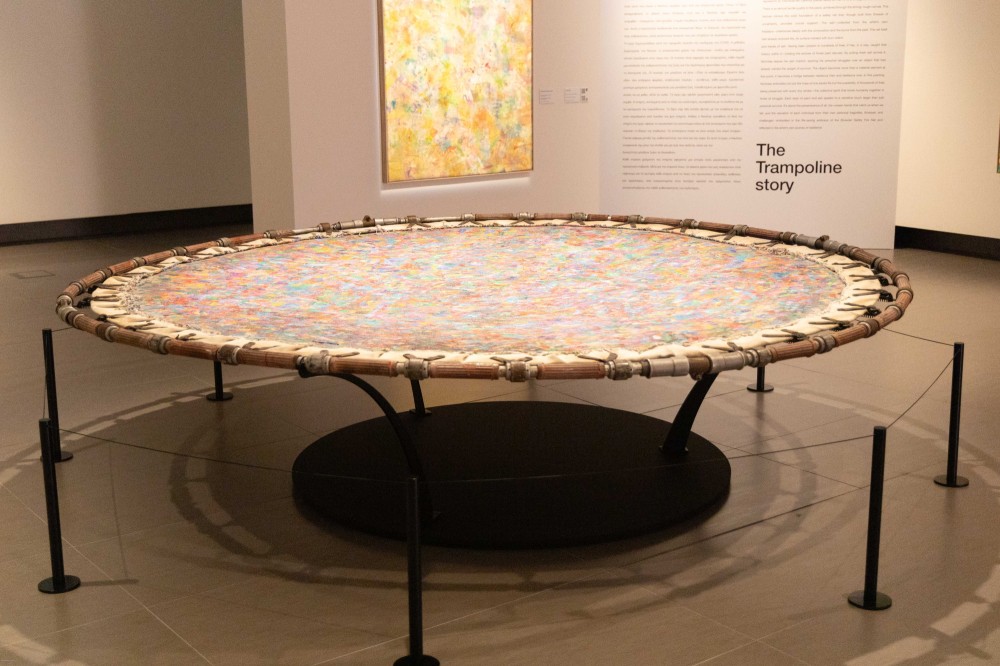
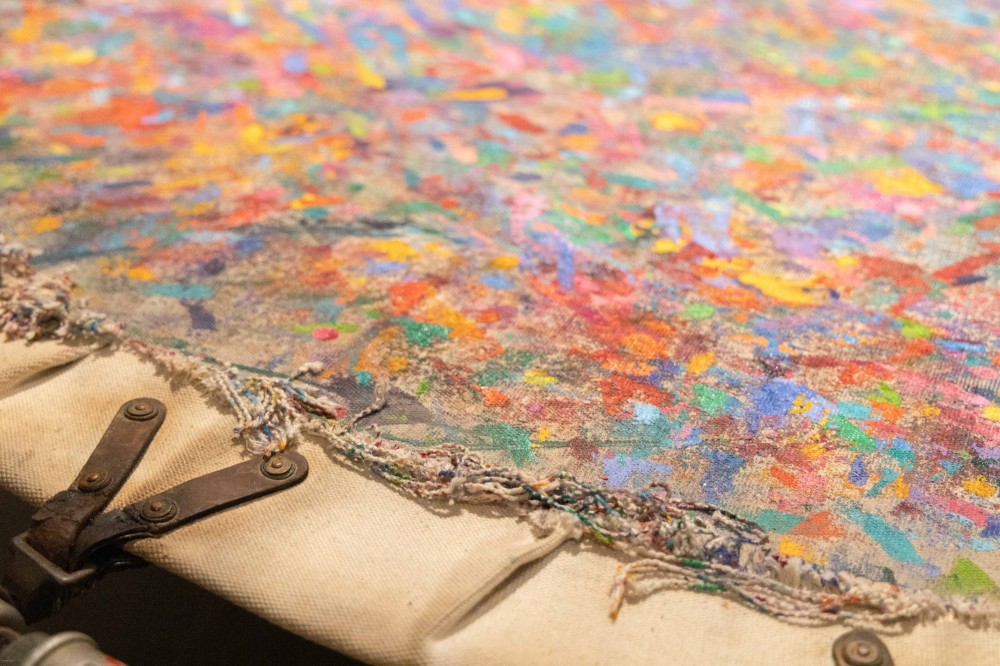
How did you support his artistic expression and journey? We made sure he had everything he needed: the shades he loves, the tools he enjoys, a safe and comfortable space to create. If he liked blue, we’d bring him ten blues. If he liked green, ten greens. If he liked a little stick, we’d bring him five. He can’t drive and has limitations, so we provided him with plenty of things and ensured he had access to everything he loves. I made sure his studio was ready, his medications were organized, and that he could move around comfortably. On my side, I handle all the “behind-the-scenes” work – frames, exhibitions, and care. I hope we’ve managed to show the world beautiful things. One piece I particularly cherish is the trampoline. All these years, we’ve been like firefighters. When he falls, we catch him. That trampoline held so much significance – it was our family’s story.
How many hours does he paint each day? Every day. Many times, he starts his day with church and then returns home to paint. His life is a cycle between faith and art. He lives like a monk of art.
Faith as a refuge
What influenced the way you managed Nikolas’s situation? Faith was everything. Honestly, I don’t know if we could have done anything without it. On the hardest days, prayer was the only thing that kept us standing. Nikolas needed it. And we, as a family, needed a place to pray together – to remember what is truly important: that there is something beyond the pain. I firmly believe that God does not give us more than we can bear.
Do you draw your strength from that?
Exactly. It’s not something I impose on others or encourage those around me to adopt – for us, it’s very personal. Some people might be stronger and not need faith. But we needed it, and Nikolas did too. For his health, for his life. It is our foundation.
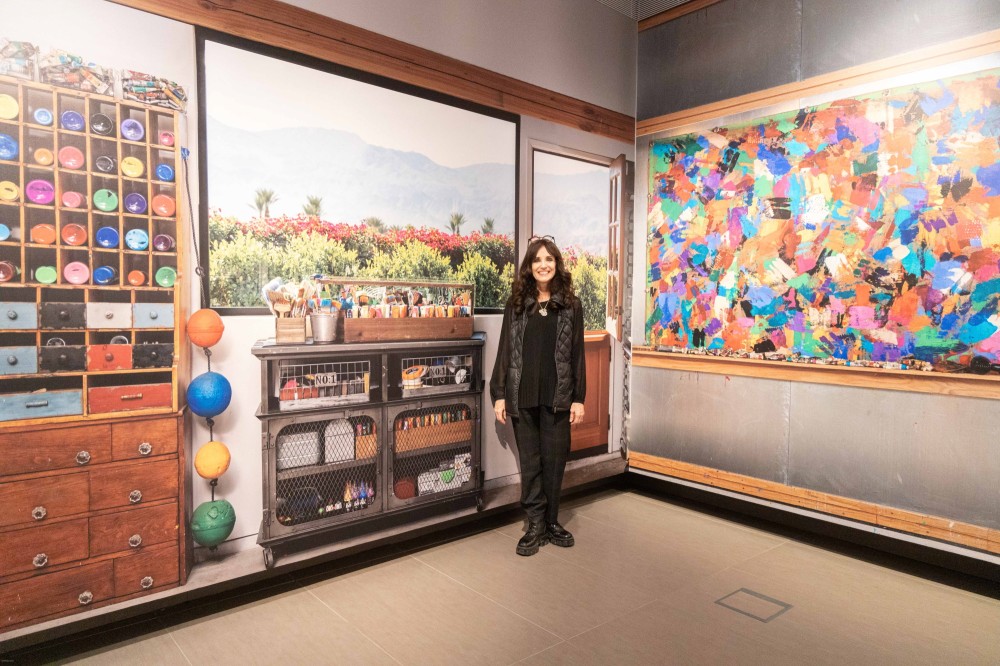
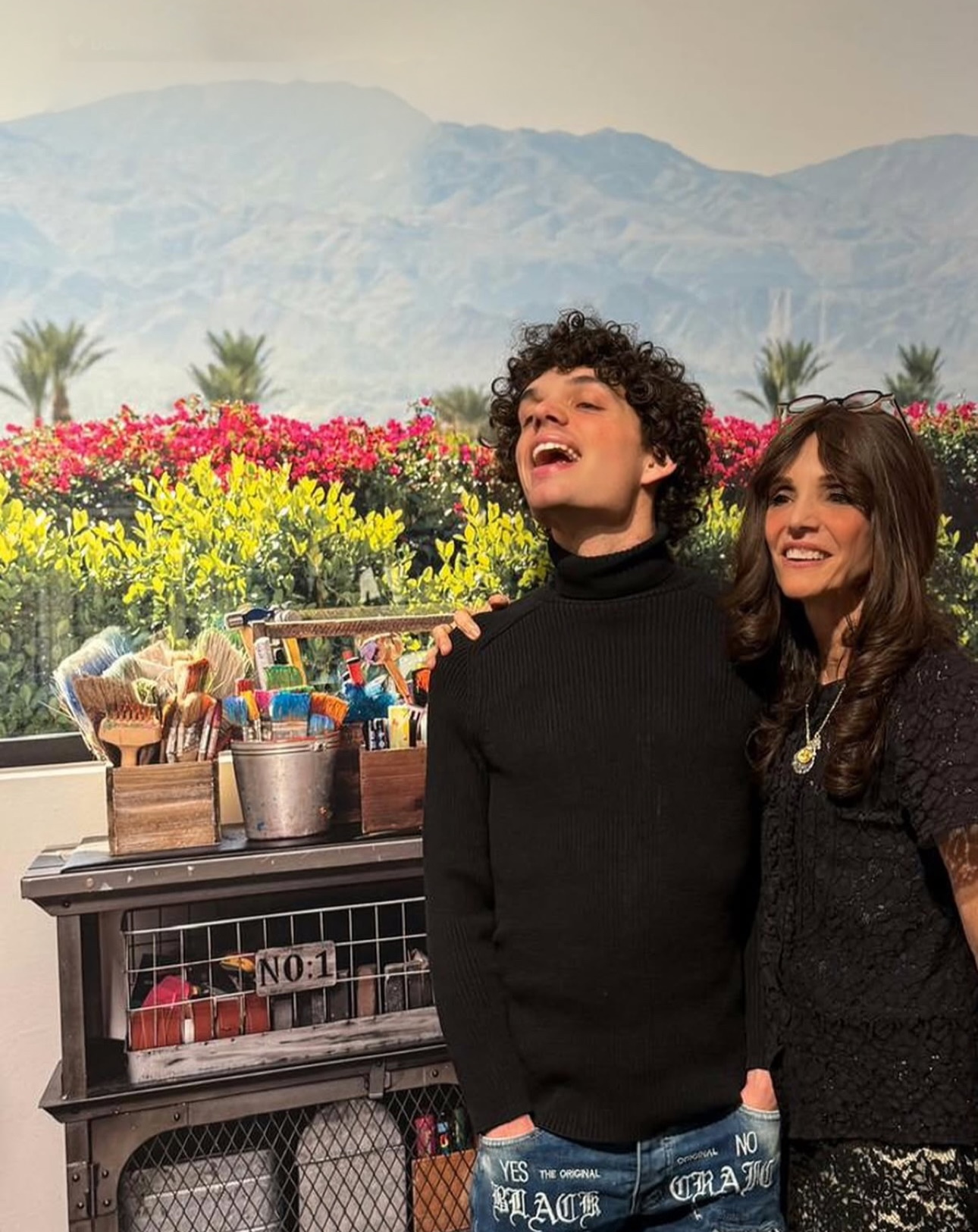
Krissan Kontaxis in the simulation of Nicholas’s studio, at the exhibition
When the voice is lost, the words remain
What was your reaction when Nicholas began losing the ability to speak? The solution was writing. We record every word he says. Whatever he says – the girls who are with him and take care of him, his friends – we write it down. These words become the titles of his artworks. Everything comes from him. There will never be an exhibition with a title of our own. Everything belongs to him.
Does he write? No, he doesn’t like writing letters. We record what he says – even if he speaks only once a day. Now we organize all this material by date. It’s like a memory archive. A piece of himself.
The home as an artistic sanctuary
How did you set up the space at home to support his artistic journey? It started in his grandmother’s room. A small little table in a corner. Then on the floor. In the dining room. And then in the garage, which we completely transformed during the summer. We practically moved the whole house, but it became his space. Now we have created a studio that connects with the house. He needs to be close for health reasons, but also for his emotional security.
It’s a huge change. Yes. But it was worth it. It took years – 10, maybe even 12 or 13. It was a long journey, but each stage had its purpose. I remember my mother saying, “The paints have a smell – you need to find a space.” We looked for external studios, but the risk was too great. The studio had to be right next to us. For Nicholas. For the difficult moments.
Acceptance is a journey
How did you process and emotionally manage this difficult reality? It’s not something that happens overnight. It’s a long process. It required time, patience, and acceptance. Just as Nicholas needs time to complete a painting, I had to learn how to support him. I had to accept that his future would be different—perhaps without marriage, without children. His exhibition at the Basil & Elise Goulandris Foundation was his “wedding.” The whole family came. It was a celebration.
The exhibition “Catch Me” at the Basil & Elise Goulandris Foundation
What is your most moving memory from the exhibition? The exhibition itself – the beauty of the presentation and the text that accompanied it. His story within the space. But also the team: Fleurette Karadonti, the museum moms, the girls in the workshops. The collaboration, the love, returning to Greece, and the feeling that we were in the right place with the best team. We felt as if we had come home.
The exhibition “Catch Me” at the Basil & Elise Goulandris Foundation
What are you preparing with the production team at the museum? We are recording everything. We are creating a memory archive – so that nothing is forgotten. Our story. The story of Greece. The opening, the exhibition, the workshops, the people speaking. All of these are parts of our journey. Perhaps one day it will become a documentary.
The Panathenaic Stadium and inclusion
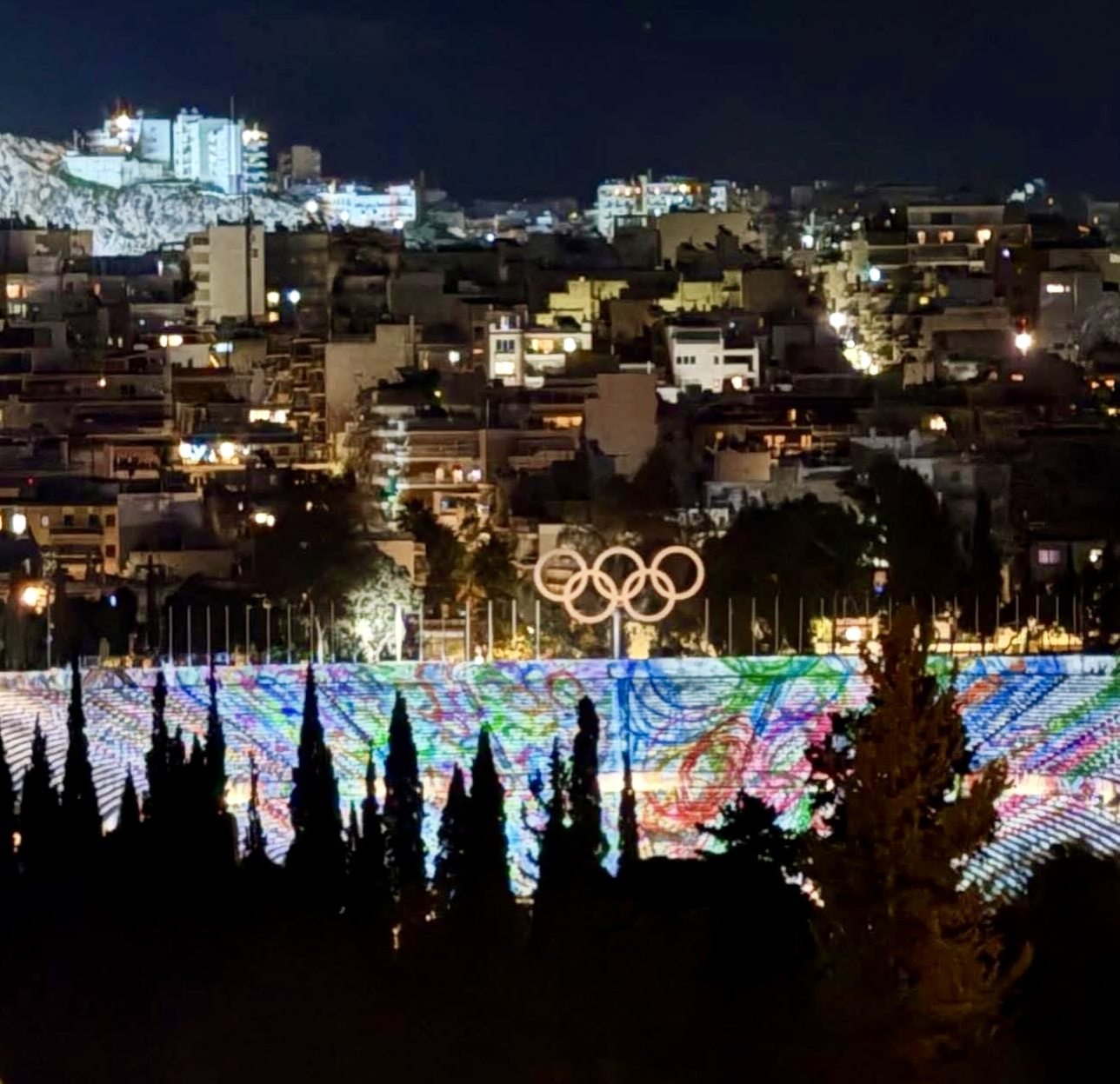
We saw the Panathenaic Stadium illuminated with Nicholas’s artwork, “Yes, I Can.” It was magnificent. I didn’t want to mention it at the time, so as not to “steal” from the exhibition. But it was so powerful, because it wasn’t just about Nicholas — it was about inclusion. We all have something to face. His art was used to give a voice to everyone. It was an act of inclusivity. A celebration of “togetherness.”
A message to mothers
What is your favorite piece of his work? I have some at home that I particularly love. They might not be in the exhibition, but I hold them close to my heart.
What would you say to other mothers facing similar situations? It’s not easy. But don’t be afraid of it. Live within the difficulty. Accept that life can change. You’re simply on a different ship, taking a different path. But the ship moves, and the view can be beautiful. It might not turn out as you dreamed, but that doesn’t mean it won’t be beautiful. It can just be… different, with its own surprises. If you feel you can’t go on, remember that everyone has their own path. For us, this was our path – and it led here. So I would say: pray. And stay positive. Even within difficulty, there is beauty. When something hard comes, say: “OK, this is hard. But there is something in this for me. Something that will make me better.” In Nicholas’s case, through his limitations – which we didn’t like – art was born. The “cannot” gave birth to the work.
What are your next plans after the exhibition in Greece? We hope to continue with similar exhibitions in museums in the U.S., with similar programs for families and individuals with disabilities. We want the message to reach as far as possible.
Photos: Penguin Productions/Xenia Tsilochristou, personal archive of Krissan Kontaxis for Marie Claire