The abstract paintings of Nicholas Kontaxis are making a
profound mark on the art world: his solo shows have caught the
keen eye of high-profile collectors, while Coachella and Adidas
have come calling with commissions. Oh, and he's only 23.
By Carû Sanders
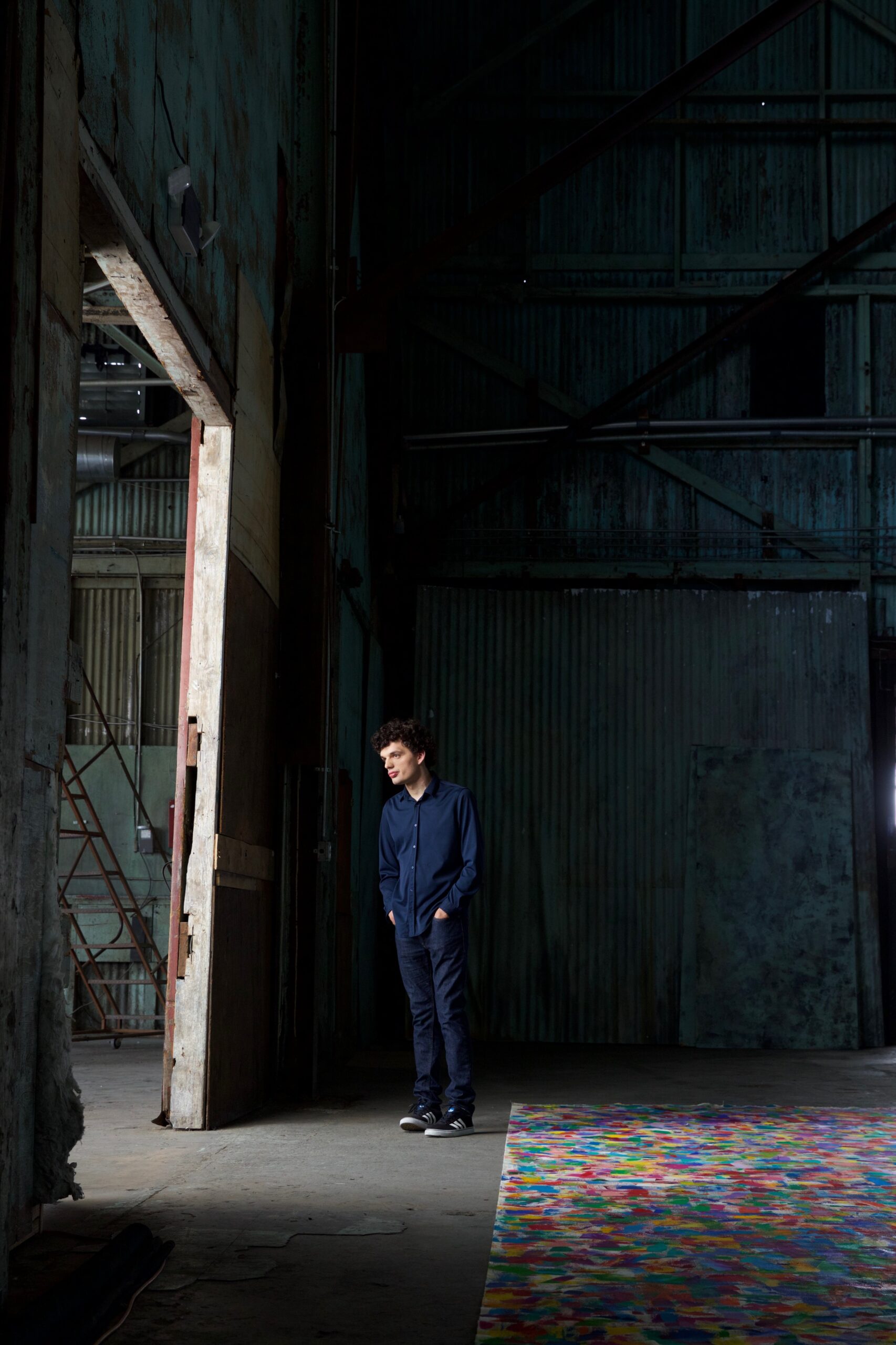
Following several sold-out shows all over the United States, Nicholas Kontaxis will show his work in London for the first time this September, and an international exhibition across the pond is a major moment for the young painter. The milestone is all the more extraordinary when you learn that the 23-year-old moves with difficulty and has limited speech.
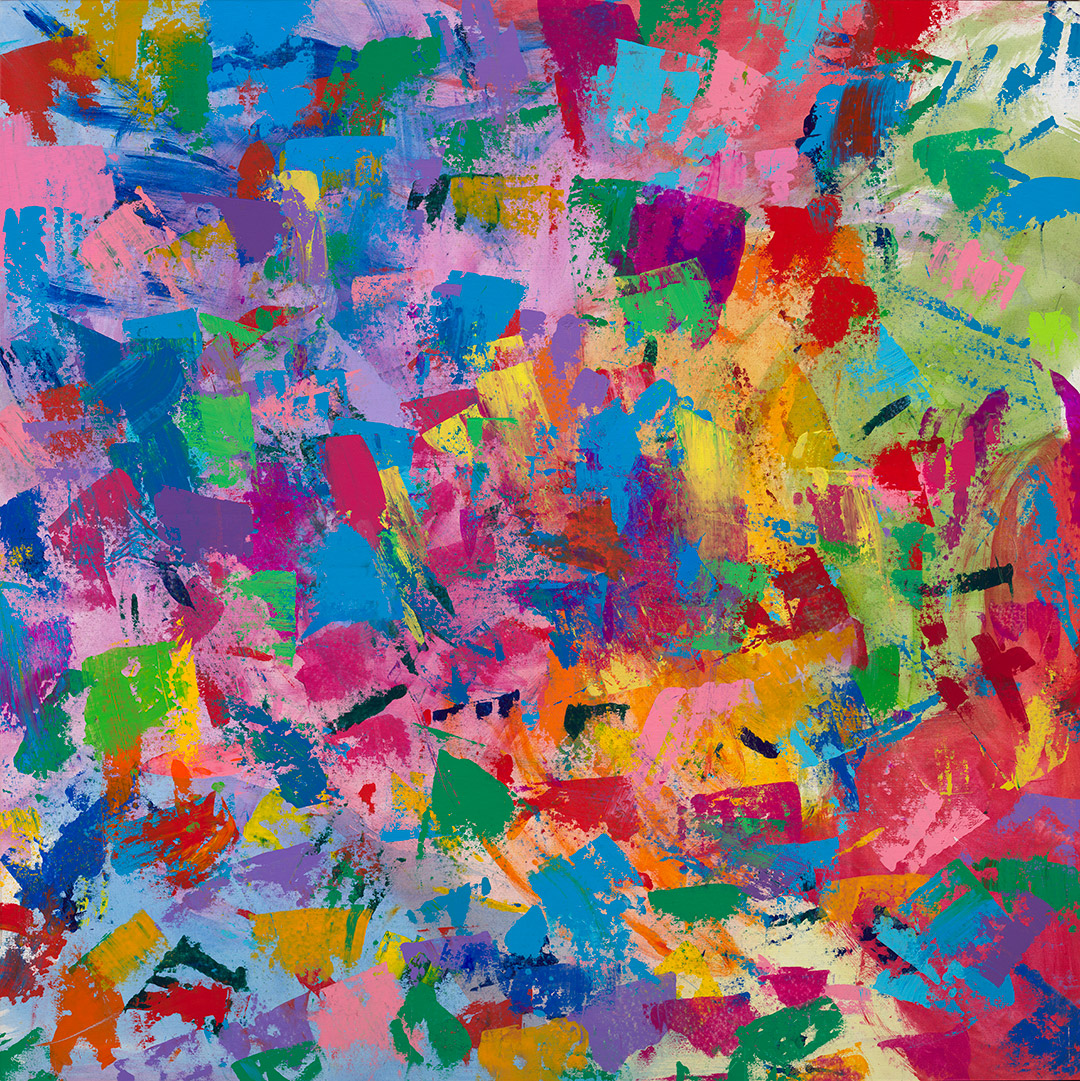
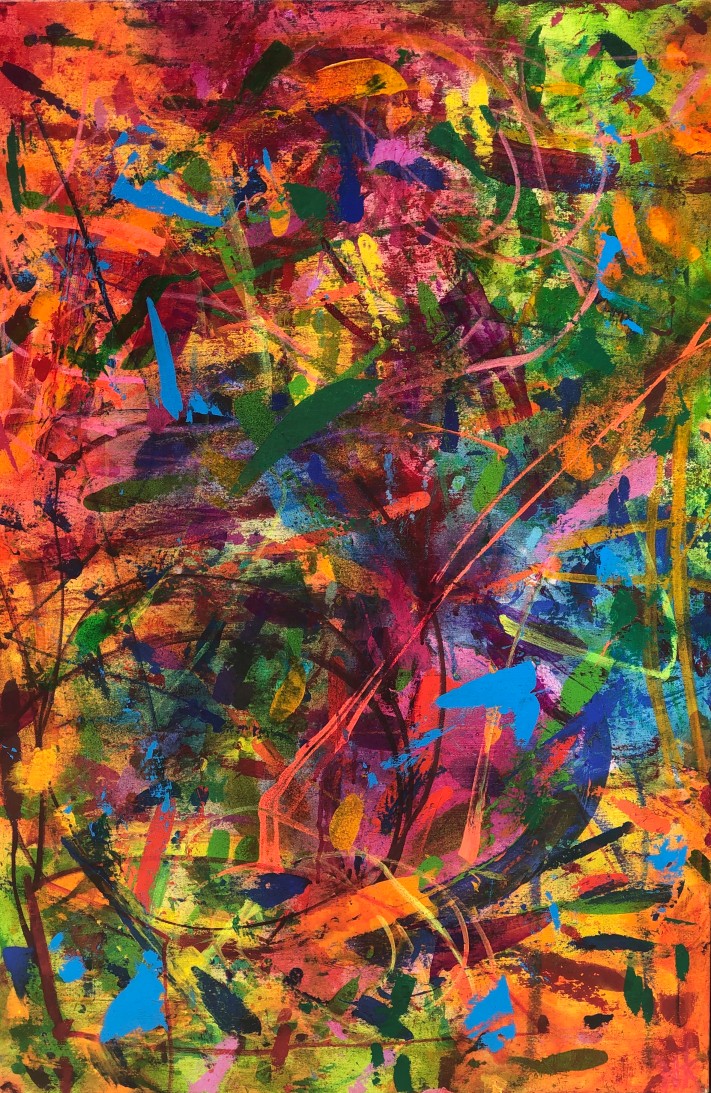
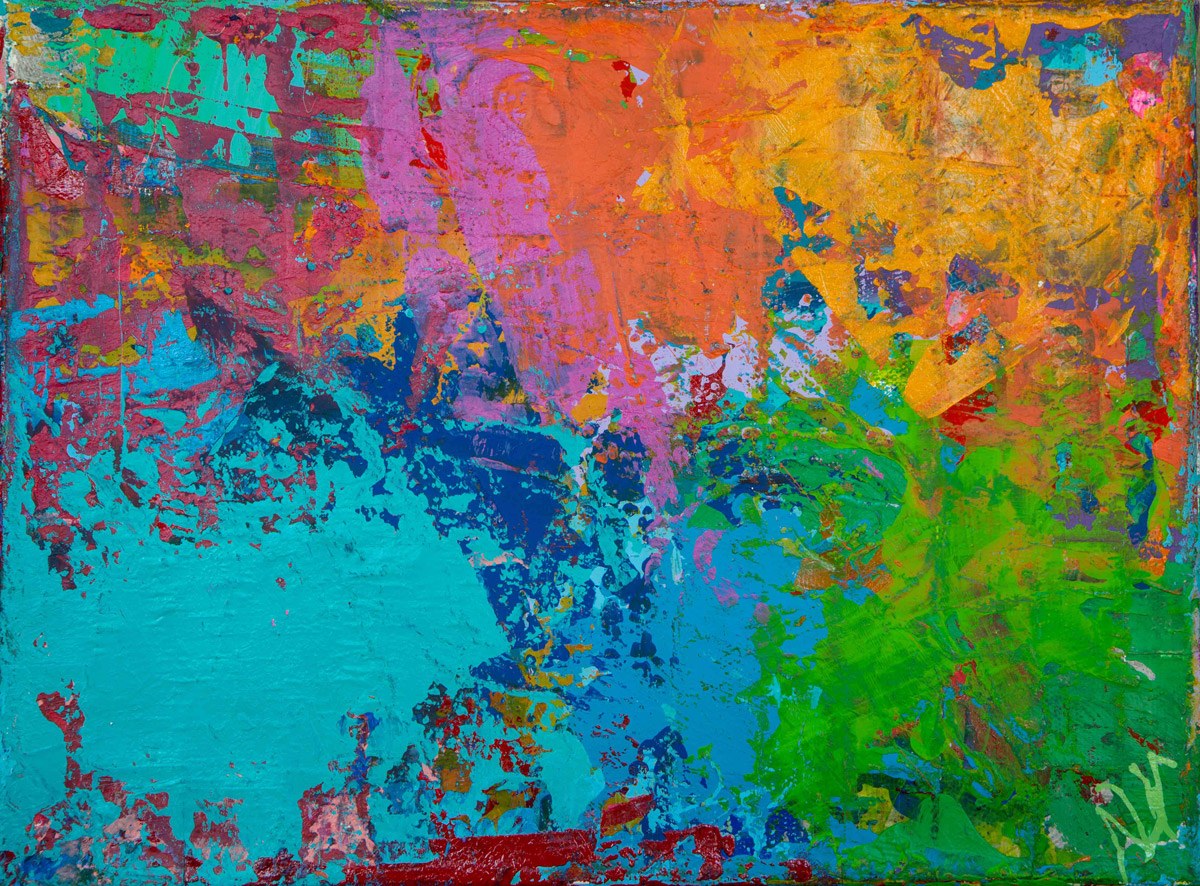
One wonders what he would say to the guests who come to look at his vibrant, large-scale murals; Kontaxis is not able to speak or convey the ‘meaning’ of his paintings with ease. With limited speech and physical disabilities, his painting is his language. The brushstrokes on his canvas are his words; the spontaneous layers of paint are his inflections and punctuation marks. Compositions are usually a series of quick brushstrokes, closely connected in a bold colour scheme, with elements that harmonise to impart a sense of optimism and joy. He has created his linguistic narrative.
Kontaxis’ parents discovered that he had a brain tumour when he was 14 months old. He can speak, but what he says changes as the seizures change. The titles of his works are certainly catchy, mini-soundbites that lend an even greater sense of playfulness to the technicolour schemes of the paintings.
Yet despite his pain, Kontaxis isn’t tortured by his art. It is his art that gives meaning to his existence. Every picture tells a story, and in this case, it is one of joy – and a reminder that something beautiful can come out of adversity.
The artist takes
a moment to reflect
Ultimately, his story is as much about a family pulling together as it is about the abstract colours upon the canvasses. The Kontaxis family refused to take the easy option; institutionalising him was never part of the plan. When asked why they chose painting as a medium, his mother Krisann explains that, “As a youngster, Nicholas enjoyed laying down patterns on papers and was obsessed with vibrant colour. When no options were left for Nicholas in the school’s disabled working programme – mainly because of his daily seizures – we were worried he would never work in his life, which was devastating for us.”
Krisann explains that she and her husband Euthym, an emergency room doctor, had a lightbulb moment. Nicholas had excelled at art in high school, and the couple had paint sitting in the garage. The school district mandated that their son had to earn a living in the job of his choice, for them to allow him to pursue the subject at school in its vocational programme.
Beautiful As Me
Euthym explains, “For some reason, it was important to us – no matter how trivial it seemed in the light of his health issues – for him to be part of the work force.” He adds, “We had to honestly assess strengths and weaknesses, and accept extreme limitations. In Nicholas’ situation, his limitations resulted in the only possibility. It was a case of ‘Let the “no’s” be the rail tracks of what is possible.”
He started to paint and, while the pieces showed promise, for the family it was never about making money – it was about creating routine and a purpose. His school allowed him to set-up a corner studio and, once he started to sell, a friend suggested holding an exhibition. The first few paintings sold fast.
What the Kontaxis family has demonstrated is that love and support can overcome limitations. His mother Krisann defines him as an “outsider artist”, which rings true in the sense that he can’t discuss his work with his audience.
Candy
But then, John Milton was blind when he wrote Paradise Lost – one of the most evocative pieces of writing in the literary canon – and he would have to keep the words in his head until his daughter could write them down for him. Jean-Dominique Bauby, author of The Diving Bell and the Butterfly was left paralysed by a stroke apart from one blinking eye. The extraordinary memoir was transcribed – like Milton, by his daughter – communicating using only his left eyelid.
Experts disagree on whether Michelangelo had gout or osteoarthritis. The famous sculptor had significant trouble using his hands, but continued to chisel away and paint until he was almost 89. Francisco Goya experienced visual problems, dizziness and mobility issues with his painting arm bit his illness didn’t limit his abilities, only transformed them into something more robust.
Let's Have A Snowball Fight
Paul Klee, Vincent van Gogh and Henri Matisse did not let their lack of mobility dampen their spirits: it is in fact well documented that some of their symptoms may have contributed to their artistic practice. Van Gogh suffered from seizures and was born with a brain lesion, which didn’t prevent him from being one of the most renowned painters in art history.
Matisse referred to his wheelchair-bound years after cancer surgery as ‘une seconde vie’ – his second life – which allowed him to rethink his priorities. Unable to travel like he used to, he saw the world and his art from a different vantage.
When She Comes By
Like Matisse, Nicholas is limited in his mobility, but while he may not be able to travel, his work does – and because his family unit (comprising his parents, brothers, aunt and others) refused to take the easy option, he is no longer anonymous outside of the small community nucleus.
The artist has been commissioned by Coachella and Adidas, while among the collectors is tennis legend Roger Federer, who purchased several of the paintings for his home. Kontaxis won’t be in London for his first international exhibition, but his work is a journey in itself; an experience of the beauty around him, via the art he creates with his own hands.
Reach – Nicholas Kontaxis’ solo exhibition, curated by West Contemporary – shows at London’s 35 Baker Street from 4-10 September