
Kathimerini - Greece
The 29-year-old Greek-American painter who touches America's heart
We met with Nicholas Kontaxis in California—a neurodivergent artist who has largely lost the ability to speak, but communicates powerfully through his art, which is gaining growing recognition in the visual arts scene of America.
By Tasoula Eptakoilis
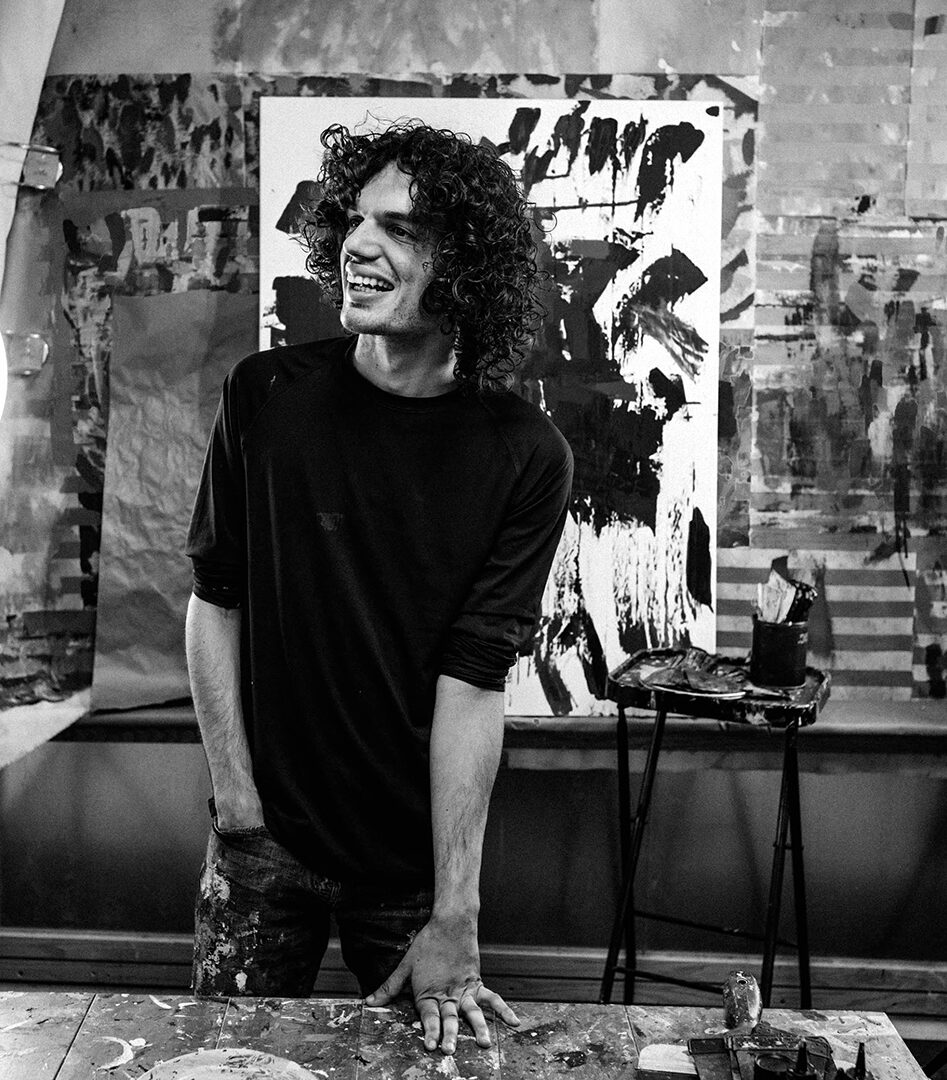
What gives people the strength to stand tall and keep fighting for something better, even when life keeps knocking them down? How does one resist the instinct to ask, “Why me?” — and instead come to see as a blessing what once felt like a curse? Do love and faith really carve out paths forward, or is that just romantic and naïve thinking?
These were the questions on my mind a few days ago as I stepped into the home of Greek-Americans Krisann (Chrysanthi) and Euthym (Efthymios) Kontaxis in Rancho Mirage, a town of nearly 20,000 near Joshua Tree National Park.
Their son Nicholas, now 29, was born with an inoperable brain tumor that has caused epilepsy and neurodivergence, in short, differences in how his brain functions. And while he is gradually losing more of his motor abilities, as well as his capacity for speech, he continues to speak without pause through his painting.
In the United States, Nicholas Kontaxis is considered one of the most promising young artists of his generation. Forbes included him among its “Under 30” talents list. Art critics praise the “strikingly structured chaos” he creates using a range of techniques — pencil, oil, and acrylic — and compare him to Sam Francis, Jasper Johns, and even Jackson Pollock.
Among those who have acquired his paintings are Roger Federer and Adele, the LA Chargers rugby team, and companies like Adidas for their collections. More than a thousand people attended the opening night of his first solo exhibition in 2017 at De Re Gallery on Melrose Avenue in Los Angeles.
Since then, his work has been shown in New York, Chicago, Atlanta, Palm Springs, and other U.S. cities, as well as in London. And now, it’s Athens’s turn. Starting March 18, his works will be on display for two months at the Basil & Elise Goulandris Foundation Museum in Pangrati, in an exhibition titled “Catch Me”, a phrase Nicholas would say as a child whenever he sensed another epileptic seizure coming on.
Tens of thousands of epileptic seizures
The sun is shining and the temperature is almost 25 degrees Celsius — a taste of summer in mid-February. “That’s what winters are like here, in this corner of California,” Krisann Kontaxis tells me as she welcomes me into the family’s lovely home, just a stone’s throw from the vast expanse of Cotino, where Walt Disney once vacationed and where the company he founded is now building a 2,000-home luxury community with entertainment venues and shops.
We fill our cups with coffee in the kitchen, which smells of freshly baked bread. “It’s a tradition — I always bake when we’re expecting family or friends,” the hostess adds. Today’s menu includes lentil soup. I also made spanakopita.”
Greece runs in her veins, even though she was born and raised in Portland. Her parents, originally from the Peloponnese, made sure to keep alive the memories and traditions of their homeland and to pass them on to the next generation, across the Atlantic.
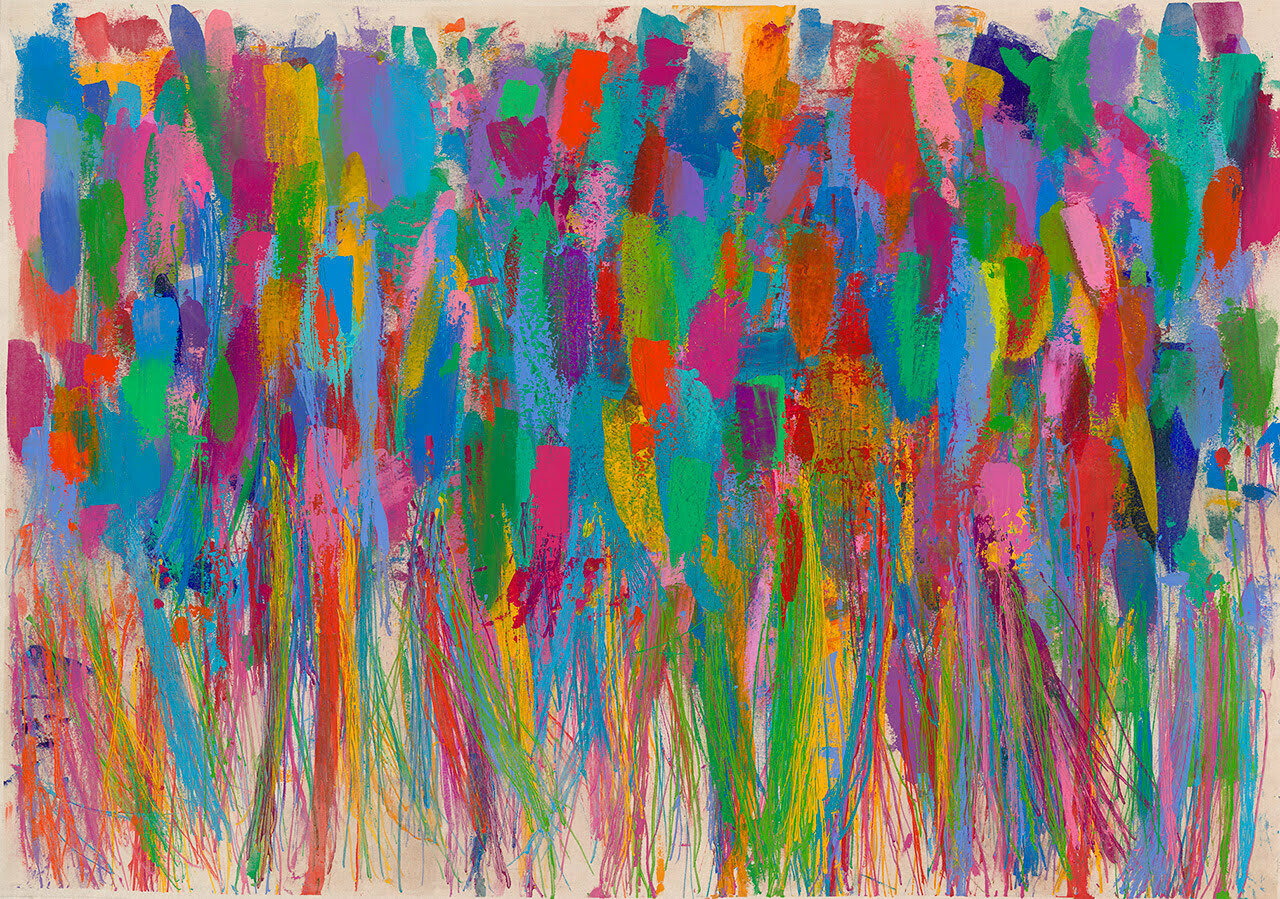
Nicholas had his first epileptic seizure when he was just fourteen months old, a rosy-cheeked, cheerful baby. Krisann was holding him in her arms when he suddenly began to tremble. That episode led to his first hospitalization and a series of exhausting tests, which eventually revealed a painful diagnosis: a tumor in the basal ganglia, areas of the brain involved in a range of functions including motor control, cognitive processes, and speech.
Their world collapsed.
As Nicholas grew older, the seizures became a daily occurrence. “There were days when he could have as many as fifty,” says Krisann. “By now, that adds up to tens of thousands—along with countless injuries, some of them serious, like broken limbs and fractured teeth from his falls.”
In elementary school, Nicholas began to express a love for painting. In his teenage years, his parents started encouraging him to pursue it more seriously. Today, the canvas has become his voice. Through it, he speaks, confides his fears, shares his dreams—he communicates.
“I won’t pretend it hasn’t been incredibly hard, especially in those early years. We felt like we’d been struck by lightning,” his mother confides. “It was like a death while still alive. We went through every stage of grief: denial, anger, bargaining, depression, and finally acceptance. Now we live in the peace of that acceptance. Sometimes we still can’t quite believe how productive Nicholas has become. For all of us—Euthym, myself, and our two other sons — it’s an extraordinary gift to witness, day after day, his remarkable ability to rise out of what could have been a disabling condition and create,” she says.
“He’s been up for a while now—he’s already in his studio, working. Would you like to go see him?”
"Don't change me"

The family’s dog, London, watches us enter the room and starts wagging her tail, although she doesn’t get up from her little bed. She’d rather keep lounging a while longer. From the speakers, Last Train to London by Electric Light Orchestra is playing loudly — a big hit from the 1970s.
Nicholas loves music. He listens to everything: from the Beatles and Kenny Loggins to Estelle and Stella Jang, as well as classical music and Byzantine hymns.
Angelica, his guardian angel for over a decade, serving as his nurse, teacher, and friend, helps him prepare the color palette for the piece he’s been working on these past few days. They sense our presence and turn toward us. She greets us with a warm “Good morning.” He smiles and repeats a lyric from the song.
The joy in his eyes is unmistakable.
As his condition began to deteriorate, his parents were faced with a difficult decision: should he continue living at home, or should he be moved to a specialized facility where he could receive the constant medical care some of his doctors were recommending?
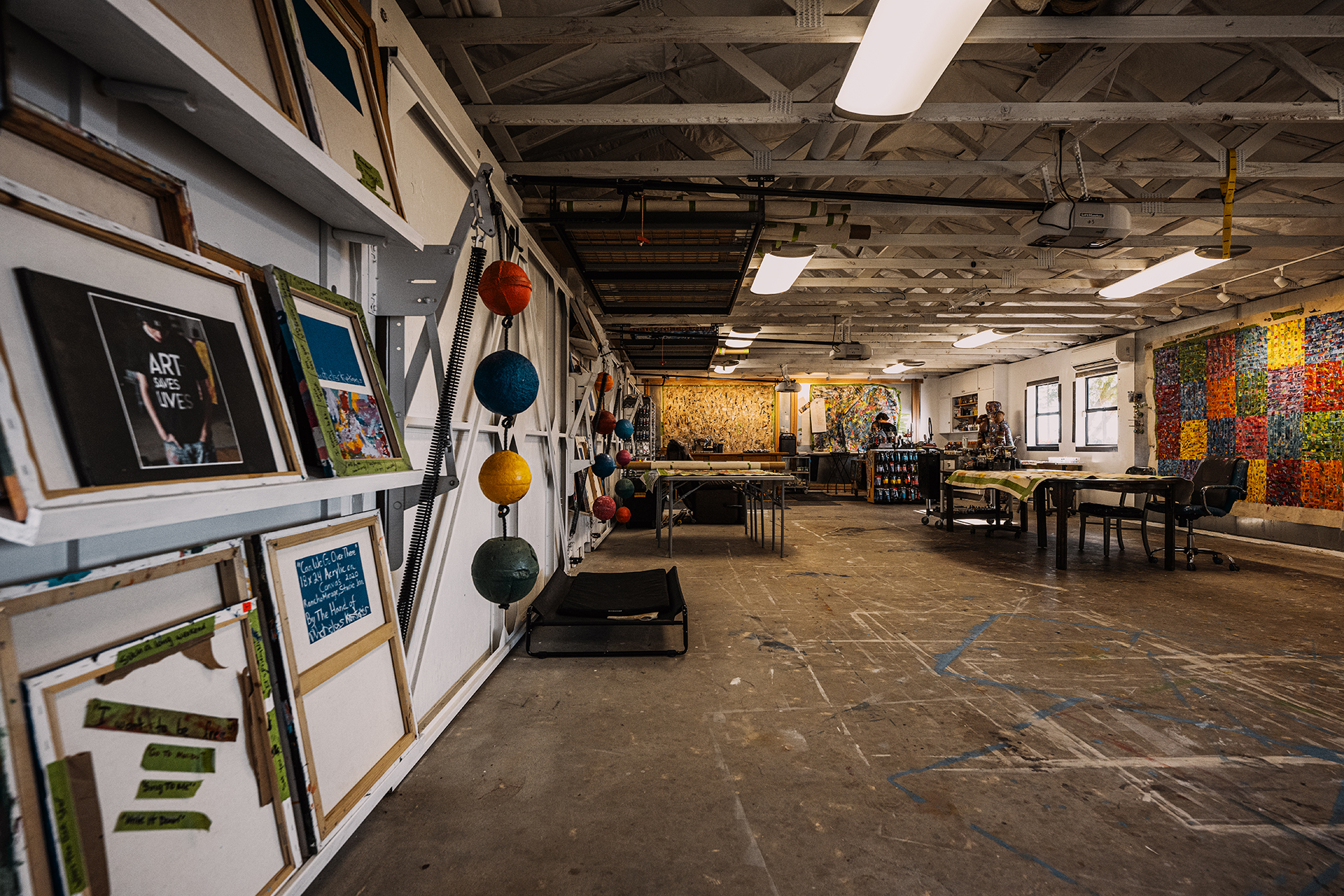
“We couldn’t bear the thought of our son living in an institution,” says Krissan. “So we decided to turn our home into one, in a way. Nicholas lives in his own apartment, has someone with him 24/7 in case of a seizure, and, most importantly, he has his studio, where he can focus on what excites him more than anything else: his art.”
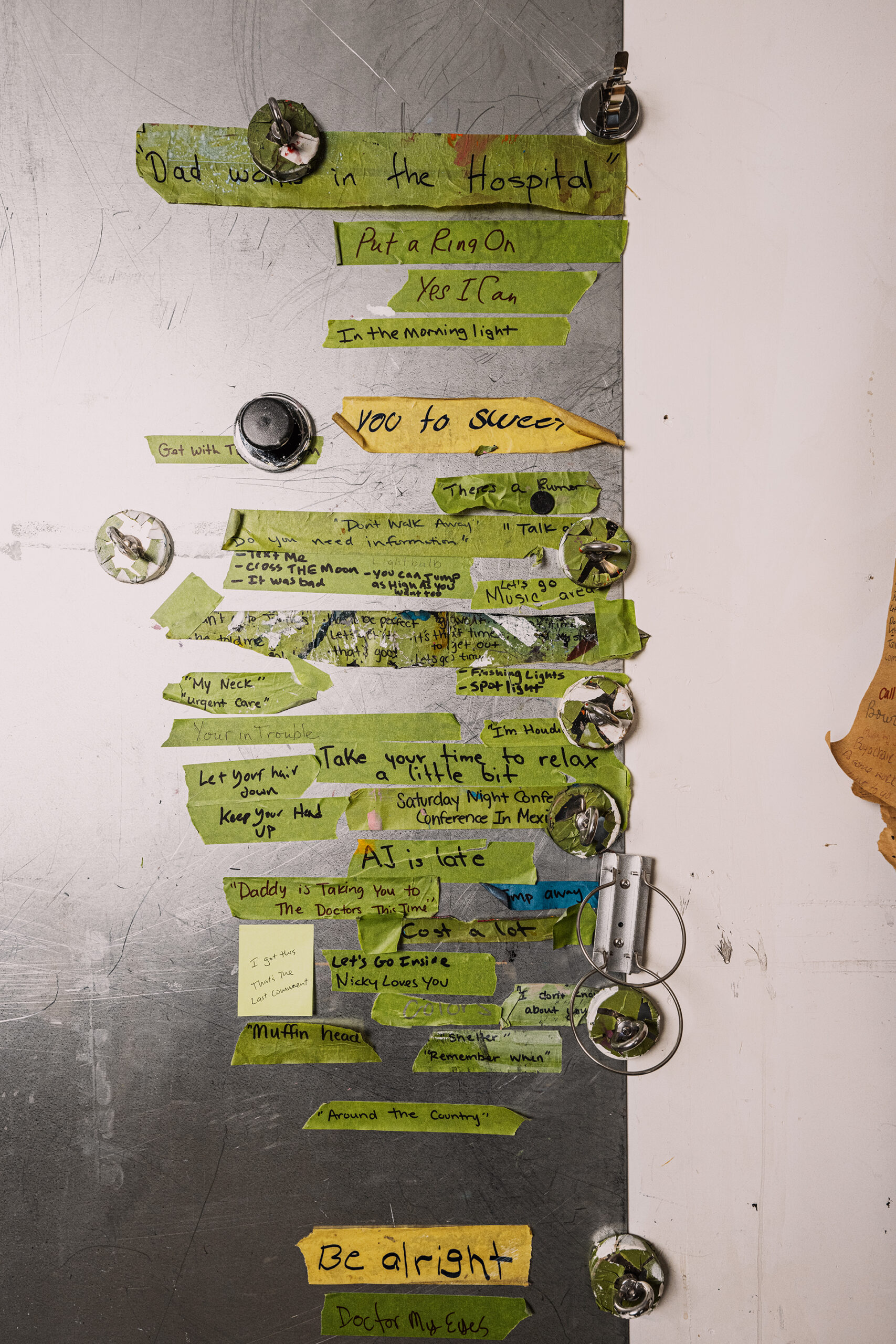
My attention is drawn to dozens of pieces of paper taped to the walls, each with a handwritten phrase. Some relate to daily life: “Can I have a cheeseburger for lunch?”,“Let’s go for a walk”, “Take a break”, “Walk with me”, “Ask Dad”, “I want a hug.”
Others feel more like raw outcries: “No one likes me”, “Don’t change me”, “I want to go to college”, “I’m going to die young.”
Some of these phrases have been used as titles for his artworks. In recent years, as he has gradually lost his ability to communicate verbally, Nicholas usually speaks only when he paints. His loved ones carefully record every word.
“His neurodivergence doesn’t mean he’s not thinking or feeling, that he’s empty inside. Quite the opposite,” says Krisann. “He just uses different tools to express himself.”
Painting heals

Emergency medicine physician Euthym Kontaxis is the head of the Emergency Department at Eisenhower Medical Center in Rancho Mirage. A painting by his son adorns his office.
“In the early years after Nicholas’s diagnosis, some neurosurgeons proposed a drastic solution to deal with the relentless seizures: a hemispherectomy— the removal of half of his brain. The chances of curing the epilepsy would rise to 70%. But the cost would be immense: he would lose vision in his right eye and be paralyzed on the right side of his body,” Mr. Kontaxis explains.
“After much thought, we decided not to go through with it. Today, seeing him paint with such passion, we know we made the right choice. For him, painting isn’t just therapeutic—it’s healing in many ways. Firstly, it strengthens him physically and musculatively: it helps him stand, move, and use his hands with the precision that painting demands. But it also benefits him psychologically: his art is his way of interacting and communicating with the world around him, and of releasing his inner tension. That’s what keeps him calm and in good spirits.”
Beyond his medical career, Euthym also studied theology and has been ordained as a deacon. Faith, he says, has been another layer of protection for him, his wife, and their children as they navigate life’s challenges. “When we realized how serious Nicholas’s health condition was, we spoke with our priest. He told us: ‘Your child doesn’t belong to you. He belongs to God. You have to protect him, care for him, and love him with all your soul.’ That’s what we’ve done. We are proud of Nicholas and admire all that he has achieved.
To me, he’s like a boxer —like Muhammad Ali, whom he loves. He takes heavy blows, he falls, but he keeps getting back up. His neurodivergence and seizures are just one part of who he is — they do not define him.”
From darkness to light
On Sunday morning, I follow the Kontaxis family to the Orthodox Church of Saint George in Palm Desert. Euthym serves in the Divine Liturgy as a deacon, Krisann chants in the choir, and Nicholas follows the service with quiet reverence. Every now and then, I hear him softly repeating lines from the psalms. “His faith in God and his devotion to art are the two paths that lead him out of the darkness of epilepsy and into the light, every single day. They’re what saves him,” his parents would later tell me.
How can one not be moved by this family’s unwavering effort to give their child a full life in every sense of the word?
As Greek-American Cal (Kallirhoe) Kvitney — one of the family’s closest friends and among the first to recognize and support Nicholas’s talent — points out: “Nicholas happened to be born with a difference, something beyond his control. But he transforms what might appear to be a disadvantage into art, into beauty. And in doing so, what some might see as weakness becomes, in his case, a source of strength. He’s not just surviving—he’s thriving.”
Life's trampoline
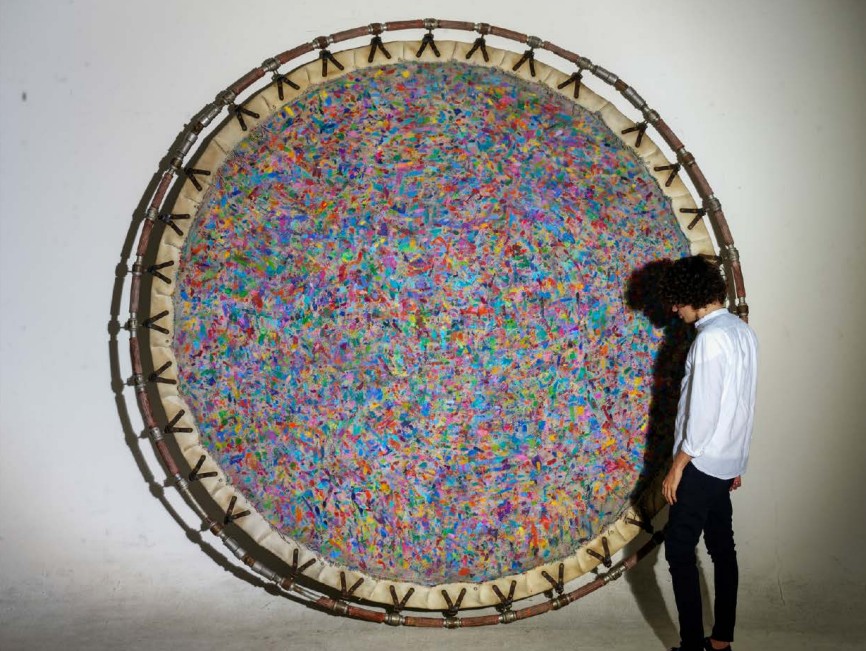
The Browder Life Net, named after Thomas Browder, who patented it in 1887, was once used by firefighters (up until the 1980s) to save people jumping from burning buildings. Nikolas’s parents found one— essentially a kind of trampoline — at an antique shop in Los Angeles and immediately saw it as a powerful metaphor for their son’s journey: his tens of thousands of epileptic seizures, his need to hold on to something, his falls.
In Nikolas’s hands, the life net became a canvas and a work of art, now featured in the exhibition at the Basil & Elise Goulandris Foundation. It stands as a symbol of resilience and the ongoing human effort to rise and keep going.
The exhibition will also include workshops and interactive activities for both children and adults.