The Greek-American visual artist, who was included this year in Forbes' "30 Under 30" list, is one of the rising names in the art circles.
Interview to Kostas Mpourousis
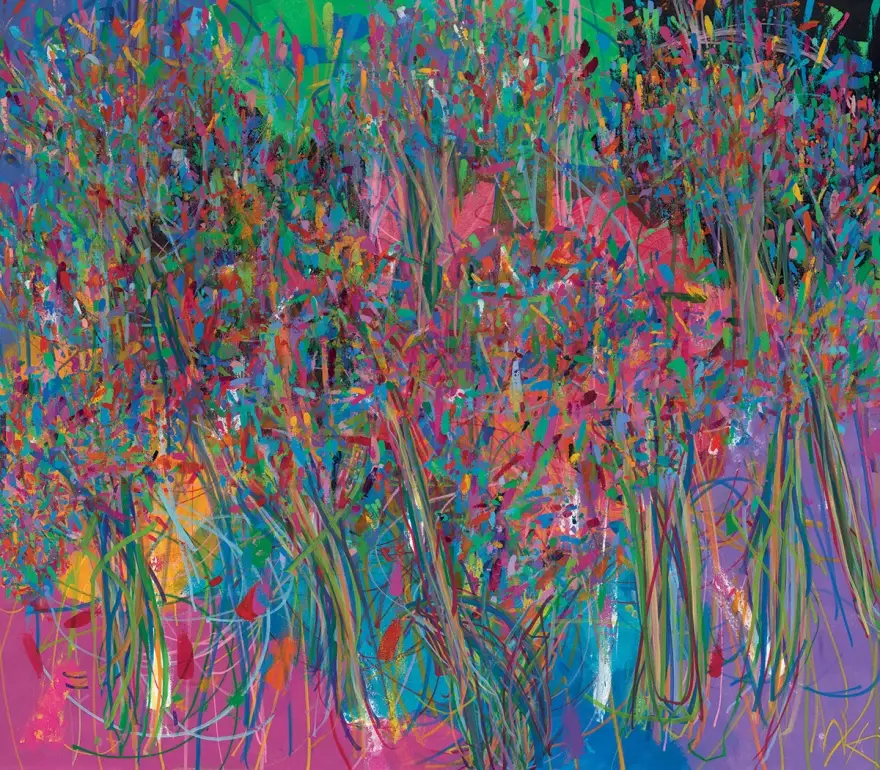
He is a painter, just 27 years old, living in Palm Springs, California. He is undoubtedly rising, talented, and in demand. You can understand this by looking at the numerous exhibitions he has already held in Europe and America—an impressive feat given his young age—the commercial collaborations he has had with the renowned Coachella Festival and Adidas, the rave reviews his creations have received, and the celebrity stamp he has earned: his works, which aesthetically balance between abstraction and expressionism, grace the contemporary art collections of Roger Federer and Adele.
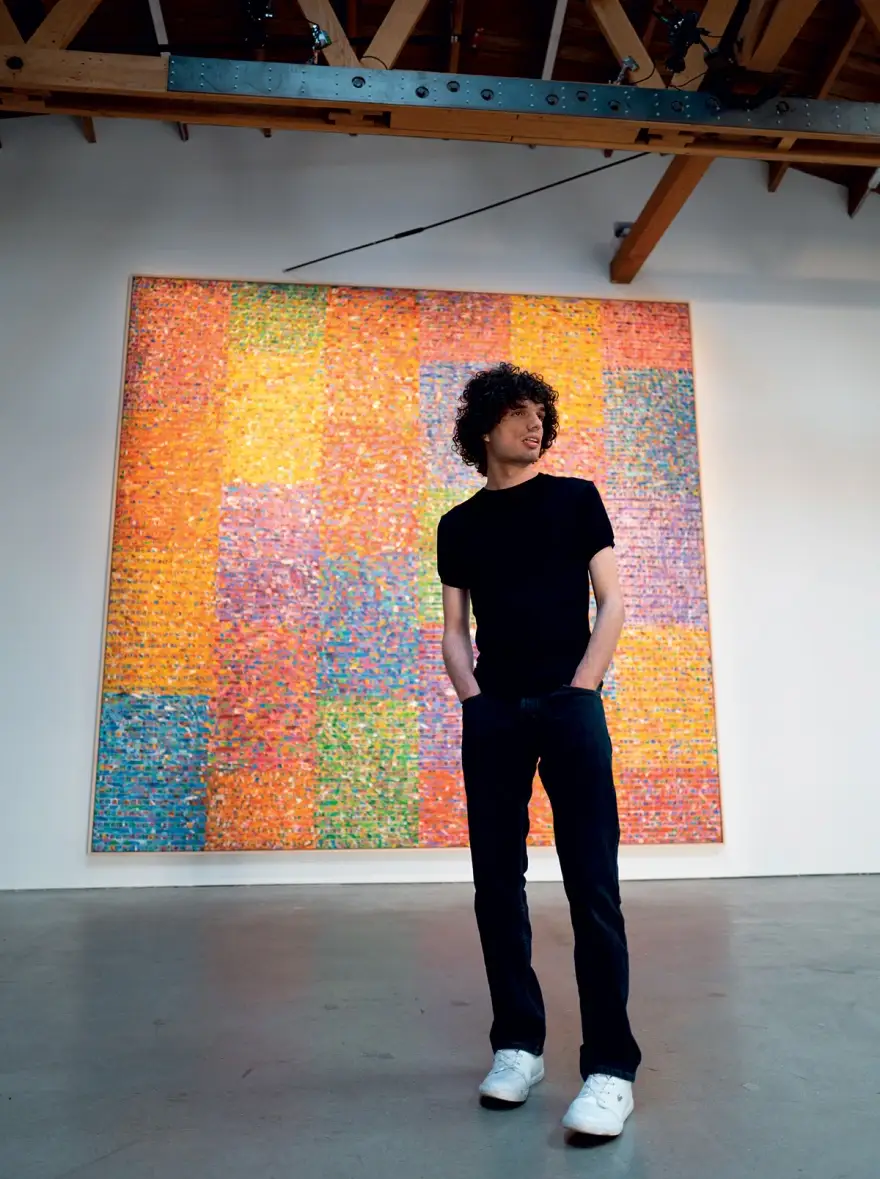
His paintings are imposing, oversized, and dazzlingly colorful. Or, as the American magazine Forbes put it better, having included the young artist in its famous “30 Under 30” list for 2023, his art is the nonverbal language he invented to communicate with the world.
Imposing, oversized, and dazzlingly colorful, his paintings receive rave reviews. "The more he tries to communicate verbally, the more emphatic his paintings become," explains his mother, Chrysanthi Kontaxis
At 14 months old, Nikolas Kontaxis, the son of Greek-American parents living in California, was diagnosed with an inoperable brain tumor. Since then, he has been experiencing epileptic seizures numbering in the thousands, suffering both physically and socially, learning each day to face yet another battle in a war without a visible surrender date.
“Living with daily epileptic seizures is a way of life for him. It is the cross he has to bear,” says his mother and caregiver, Chrysanthi, who introduces him to others. Due to his neurodiversity, Nikolas speaks very little. But honestly, his paintings tell and communicate far more than words could ever contain or describe.
“We never imagined that this difficulty would open a path to beauty, revealing a colorful new world of expression and purpose. The more he tries to communicate verbally, the more emphatic his paintings become,” his mother explains.
She says she is a second-generation Greek-American, while her husband, Efthymis, is first-generation. “Our roots are from Derveni in Achladokampos and Loutraki. Our parents emigrated to Portland, Oregon, and Vancouver, Canada, respectively. Nikolas was born in Arizona and grew up in Rancho Mirage, California. Our family is faithful to the Orthodox faith and the traditions of our ancestors. Nikolas’s two siblings are chanters in the local church.”
She also expresses gratitude for the opportunity to see her 27-year-old son not only excel but also find his place in a society that — let’s be honest — does not easily accept, digest, or embrace any kind of difference. “I have seen how much the odds were against him from when he was a baby. But I am lucky to witness how he managed to survive, to be reborn every time from his ashes, and to fight back against the odds, brushstroke by brushstroke on the canvas. I thank God daily for allowing all this beauty to emerge from great spiritual and physical pain.”
The 27-year-old Nikolas Kontaxis has already held exhibitions in Europe and America, and has established commercial collaborations with the Coachella Festival and Adidas. His works adorn the contemporary art collections of Roger Federer and Adele. Ask ChatGPT
A decisive factor for his health prognosis and development was the family’s choice to integrate him into the school environment and later into the wider social world. His parents never considered institutionalization as an option. Instead, they encouraged and nurtured his emerging talents, urging him to cultivate his strengths — even when they seemed trivial or insignificant compared to his seemingly insurmountable challenges.
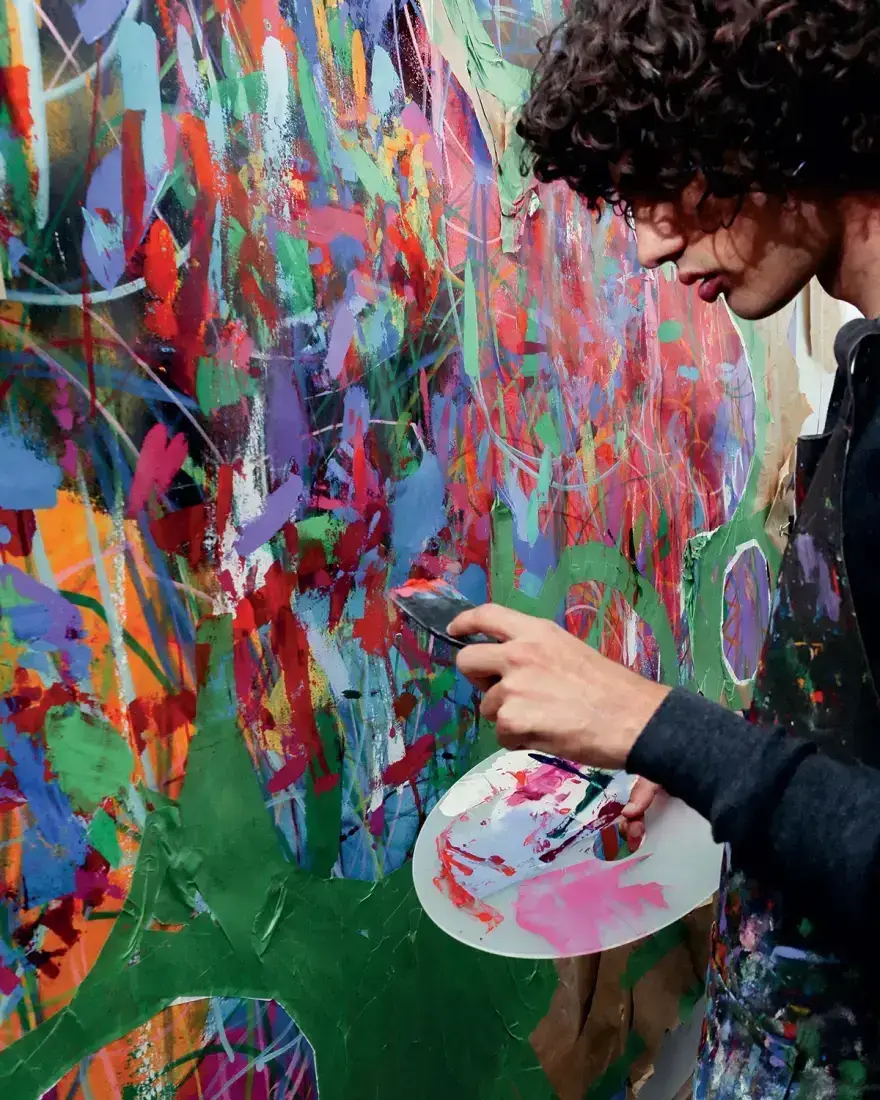
What did he love as a child? Colors and the tactile world around him. “His hands always had something special,” his mother recalls. “They were always the first parts of his body to recover after each seizure. He always wanted to touch things to feel them by pressing and pulling. And he was always fascinated by colors, as if they awakened him from the state he was in.
I remember his earliest drawings were just abstract lines and dots, varying in size and shade, patterns that still run through his work today.”